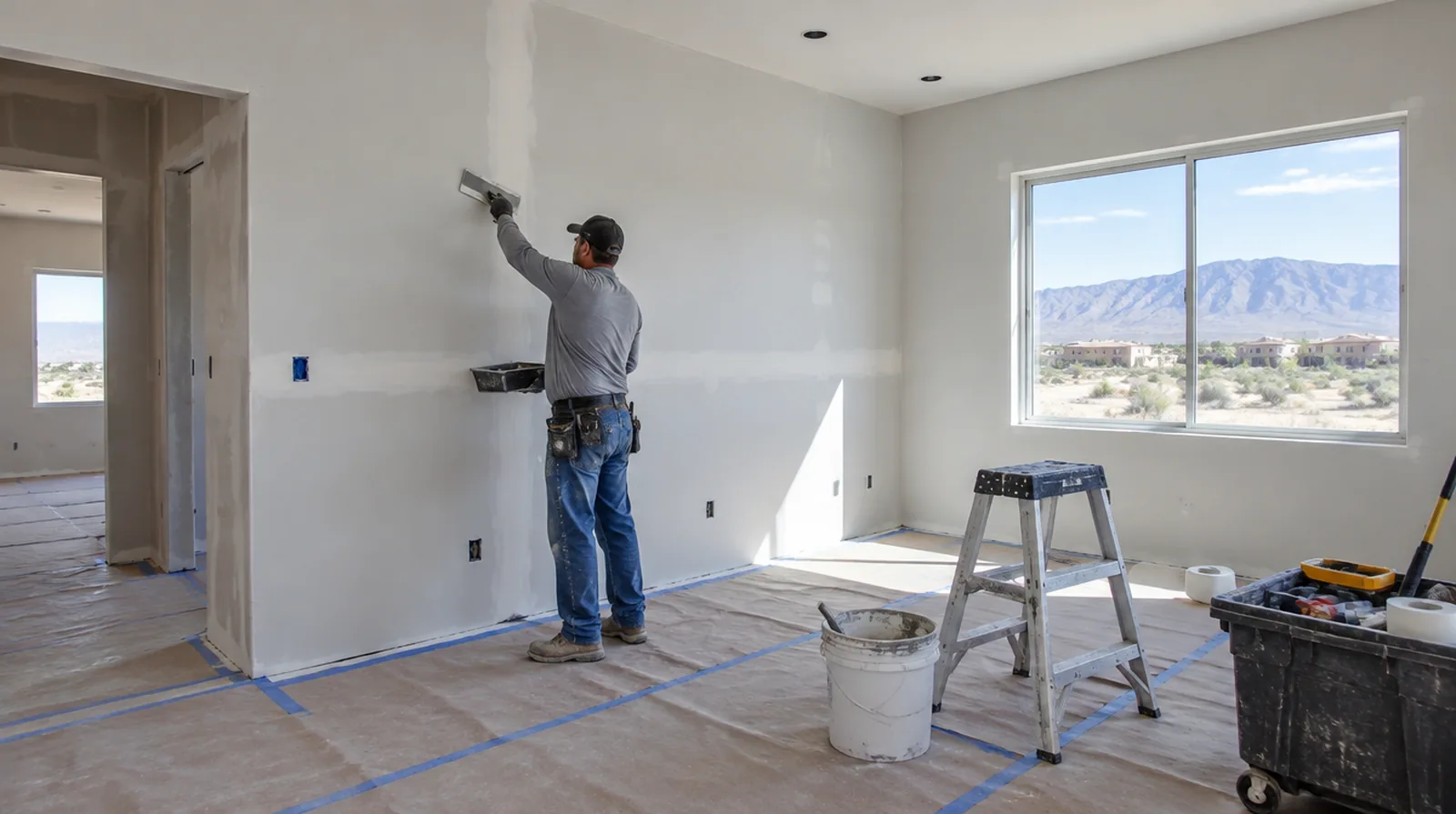
A plan built around the room, not only the patch
Before a room can be decorated confidently, the drywall work needs a clear purpose and a stable base. Rio Rancho Drywall Company brings together options for Rio Rancho interiors where a wall, ceiling or partition needs attention. Describe the defect, its history and the desired finished appearance before deciding how much material to replace. Some surfaces need a localized patch, while others need broader preparation or a cause investigated by another trade. The aim of the planning stage is to separate those situations, not to hide every problem under the same coating. A written scope can then explain both the physical repair and the condition the next decorating stage will receive.
Drywall Installation: inspect before decoration
Review dry finished walls while their edges remain noticeable and before fixed furnishings obstruct access. Check the agreed lighting conditions and record any remaining preparation before painting starts. For this part of the project, plan temporary storage and the minimum working clearance before material is carried into the property. See the drywall installation guide for the scope questions, preparation stages and finishing decisions specific to that work.
Soundproof Drywall: coordinate electrical boxes
Opposing outlets and unsealed openings could produce weak points in a separating wall. Electrical changes should be planned with the suitable trade and within the required assembly details. For this part of the project, state whether the obstruction will be removed or whether finishing stops at the section that can be reached. See the soundproof drywall guide for the scope questions, preparation stages and finishing decisions specific to that work.
Popcorn Ceiling Removal: protect the entire room
Ceiling removal creates overhead debris that can reach walls, floors and fixtures. Arrange masking, furniture relocation and a suitable removal route rather than covering only a small patch below. For this part of the project, describe when the mark first appeared and whether it has changed through more than one season. See the popcorn ceiling removal guide for the scope questions, preparation stages and finishing decisions specific to that work.
Drywall Repair: protect adjacent surfaces
Fine gypsum dust can travel beyond the immediate patch unless floors and nearby furnishings are protected. Identify the possessions to move and agree which adjacent spaces have to stay usable. For this part of the project, allow for intervals between coats as well as active labor rather than assuming the entire process happens continuously. See the drywall repair guide for the scope questions, preparation stages and finishing decisions specific to that work.
Water Damage Drywall Repair: assess material condition
Look for changes in panel strength and face condition as well as the visible color of a mark. The affected material behind the finish may extend past the stain seen from inside the interior. For this part of the project, confirm access hours and protection requirements before promising a start date or a short completion window. See the water damage drywall repair guide for the scope questions, preparation stages and finishing decisions specific to that work.
Commercial Drywall: coordinate approvals
Delivery times and inspection stages may depend on local requirements as well as building management. Identify which consents and project information the client or design team must provide. For this part of the project, discuss how the finishing materials can dry without disrupting comfort or spreading dust elsewhere. See the commercial drywall guide for the scope questions, preparation stages and finishing decisions specific to that work.
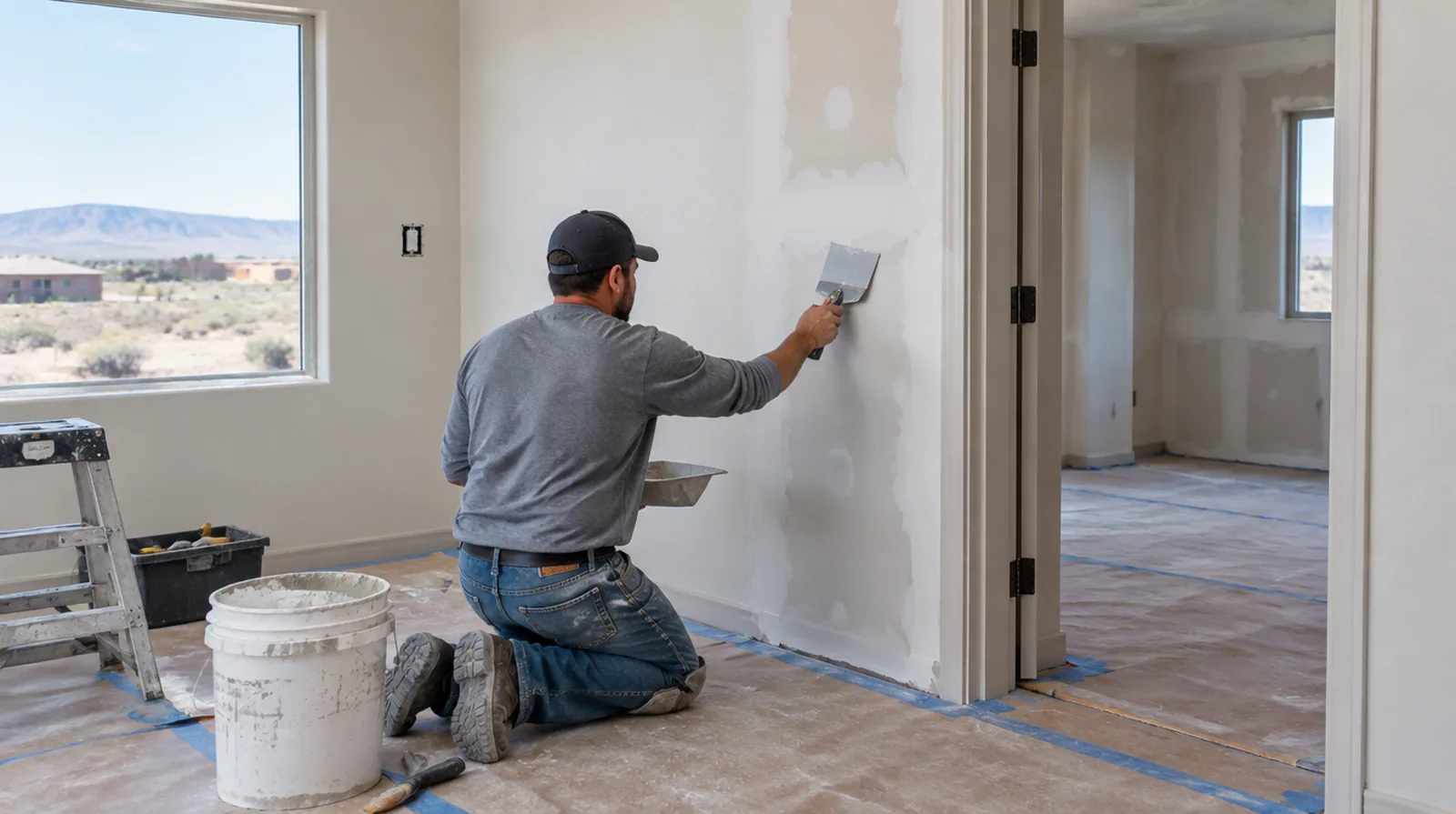
Ceiling Repair: separate fixtures from board work
Handling lights, sprinkler fittings and air grilles can require appropriate trades and building coordination. Assign removal and reinstatement responsibilities for any fitting that blocks safe repair access. For this part of the project, identify the person responsible for removing and reinstalling each item before the work begins. See the ceiling repair guide for the scope questions, preparation stages and finishing decisions specific to that work.
Skim Coating: clean and prepare the wall
Adhesion can be compromised by dirt, oil or residues left on the old coating. Preparation may include cleaning and a suitable bonding treatment based on the condition of the current surface. For this part of the project, discuss containment and cleaning expectations before choosing how to stage the room work. See the skim coating guide for the scope questions, preparation stages and finishing decisions specific to that work.
Drywall Finishing: cover fastener heads
Fill fastener depressions level with the surrounding face without creating unneeded mounds. Adjust any projecting or paper breaking screw before applying material over the location. For this part of the project, complete the necessary review of concealed work before replacement board closes the opening. See the drywall finishing guide for the scope questions, preparation stages and finishing decisions specific to that work.
Texture Matching: judge from normal positions
Assess the dried texture from everyday viewpoints instead of judging only a close view of a wet sample. The planned paint sheen and oblique light both belong in the final appearance discussion. For this part of the project, describe the nearby alterations and the sequence between those changes and the first visible defect. See the texture matching guide for the scope questions, preparation stages and finishing decisions specific to that work.
Access and drying conditions in Rio Rancho
The route to a Rio Rancho work area deserves attention before materials arrive. Include tract-home cul-de-sacs and garage entries in the first discussion, together with the spaces that must remain available during the project. Outdoor conditions such as very dry air and strong sun do not tell the whole story of how compound dries indoors; the actual room environment needs to support each coat. A plan for preventing fast-dry cracking in arid air should leave time for assessment and any required handover from other trades. Protection may also need to continue through corridors and entrances rather than stop at the room boundary. Arrange those details early so setup does not become an unexpected interruption to the rest of the property.
Compare the same finishing boundary
Price has context only when the intended result is described clearly. Check whether the work ends with hung board, finished joints or a surface ready for decoration. Review the support at replacement edges and the amount of surrounding material included in the blend. Then discuss the parts that are easily overlooked: access preparation, cleanup, primer and the work of disconnecting or reinstating fittings. Some of those tasks may belong to another trade, which is useful to know before a start date is agreed. An unexpected condition should be assessed openly and added to the scope only after its effect has been explained.
Arrange the information before the next step
Prepare a wide photograph of the room, closer views of the affected surface and rough measurements. Note any known leaks, earlier repairs or changes in the building. Describe the desired appearance after decoration and whether the room needs to remain occupied. A site assessment can then focus on the material condition and the most suitable method, instead of using the first visit only to discover basic access details. Visit the contact page for the business address and a map of the area served. Use the form to describe the work; or call the number shown at the top of this page.
Read about the project approach or view contact and planning details.
More planning details for Rio Rancho
Rio Rancho homes are often stucco outside with drywall inside, and the dry climate shapes how repairs behave. Compound can dry too fast in very low humidity, which can cause cracking or poor bonding. Ask how the finisher controls drying in summer.