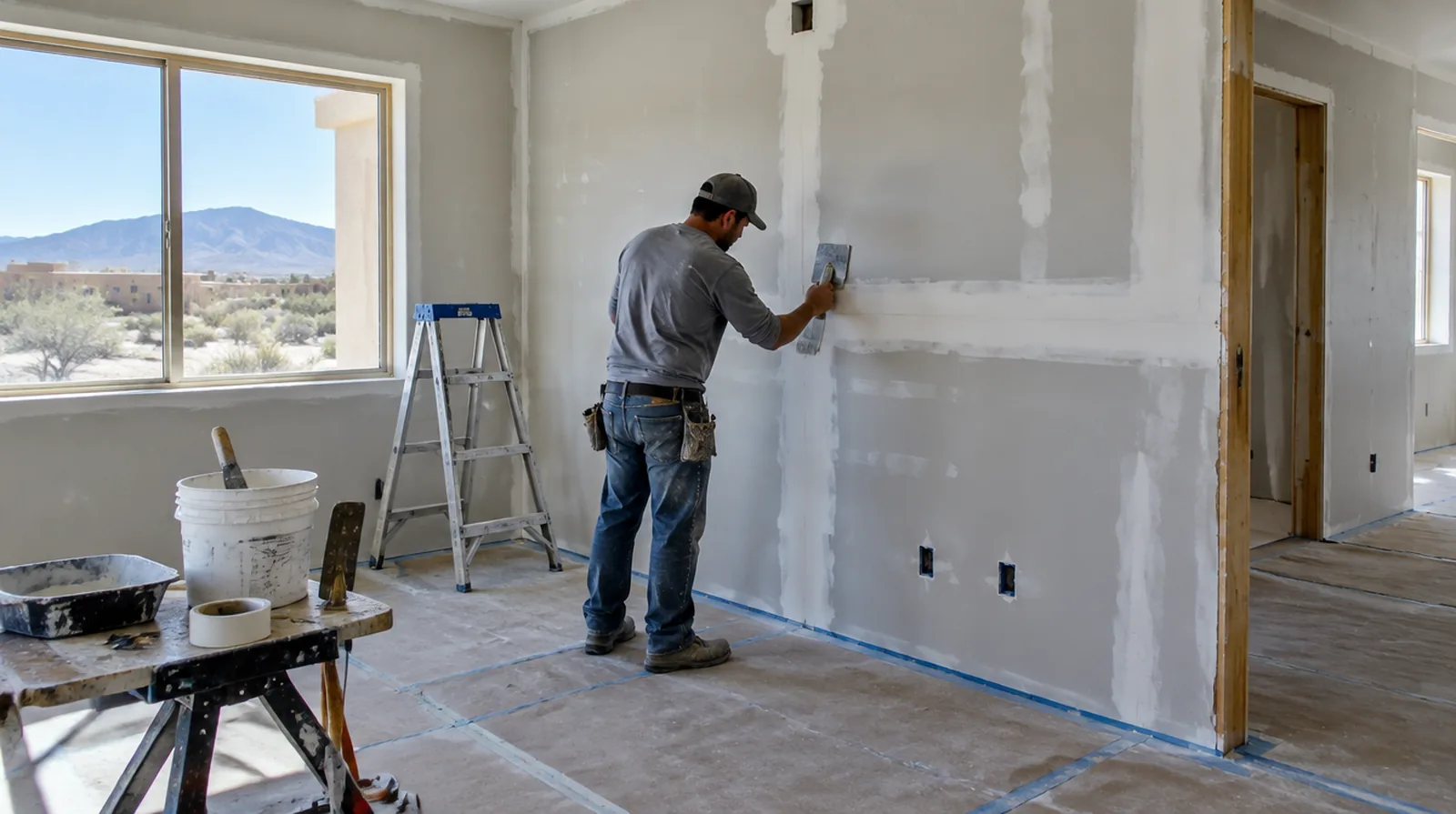
Handle small fastener marks
A visible screw or nail bump can indicate movement between the board and its supporting framing. Adding appropriate fastening nearby may be necessary before the damaged spot receives finishing compound. For a project with several trades, agree which inspection or handover point must happen before the next person starts work.
Feather beyond the opening
Concealing a patch perimeter requires a tapered finishing area wider than the opening itself. A broad blend reduces the ridge that otherwise appears when light travels across the wall. Where a neat final edge matters, agree whether the finish ends against existing trim or whether that trim will be removed and replaced.
Choose the patch boundary
Loose paper and crumbling gypsum must be removed until the surrounding panel can support a durable repair. A tidy rectangular cut often provides stronger backing than following an irregular broken edge. When a wall has repeated defects, keep a record of earlier repair attempts so a new assessment does not simply repeat an unsuccessful approach.
Review with side lighting
A patch that looks flat from the doorway may still show a small hollow under a nearby window. Checking from more than one angle helps separate surface imperfections from differences in paint sheen. If a room has only limited ventilation, discuss how the finishing materials can dry without disrupting comfort or spreading dust elsewhere.
Set the paint boundary
Even a well blended patch can remain visible when touched up with an aged or unavailable paint color. Repainting the full wall from corner to corner may give a more consistent appearance. If occupancy must resume on a certain day, include the later primer and paint stages in the timetable as well as drywall installation and finishing.
Identify the cause
A dent from moving furniture calls for a distinct repair than a joint that repeatedly opens beside a door. Describe any change in the defect and check whether the surrounding board is still stable. If there is a fixed move in date, reserve adequate time for the coating stages after drywall work instead of counting only the installation period.
Build thin finishing coats
Shaping a repair through thinner coats gives more control than depositing all the material at once. Judge the previous layer only after it has dried adequate for the next operation. Before comparing two proposals, check that both include the same protection, finishing and cleanup boundaries instead of comparing totals alone.
Document recurring movement
A crack that repeatedly reappears might need the cause investigated before more cosmetic work. A drywall estimate should state when another trade needs to investigate before surface work proceeds. If the coating stability is unclear, assess which layers are adequately bonded and which should be removed rather than simply hidden beneath new material.
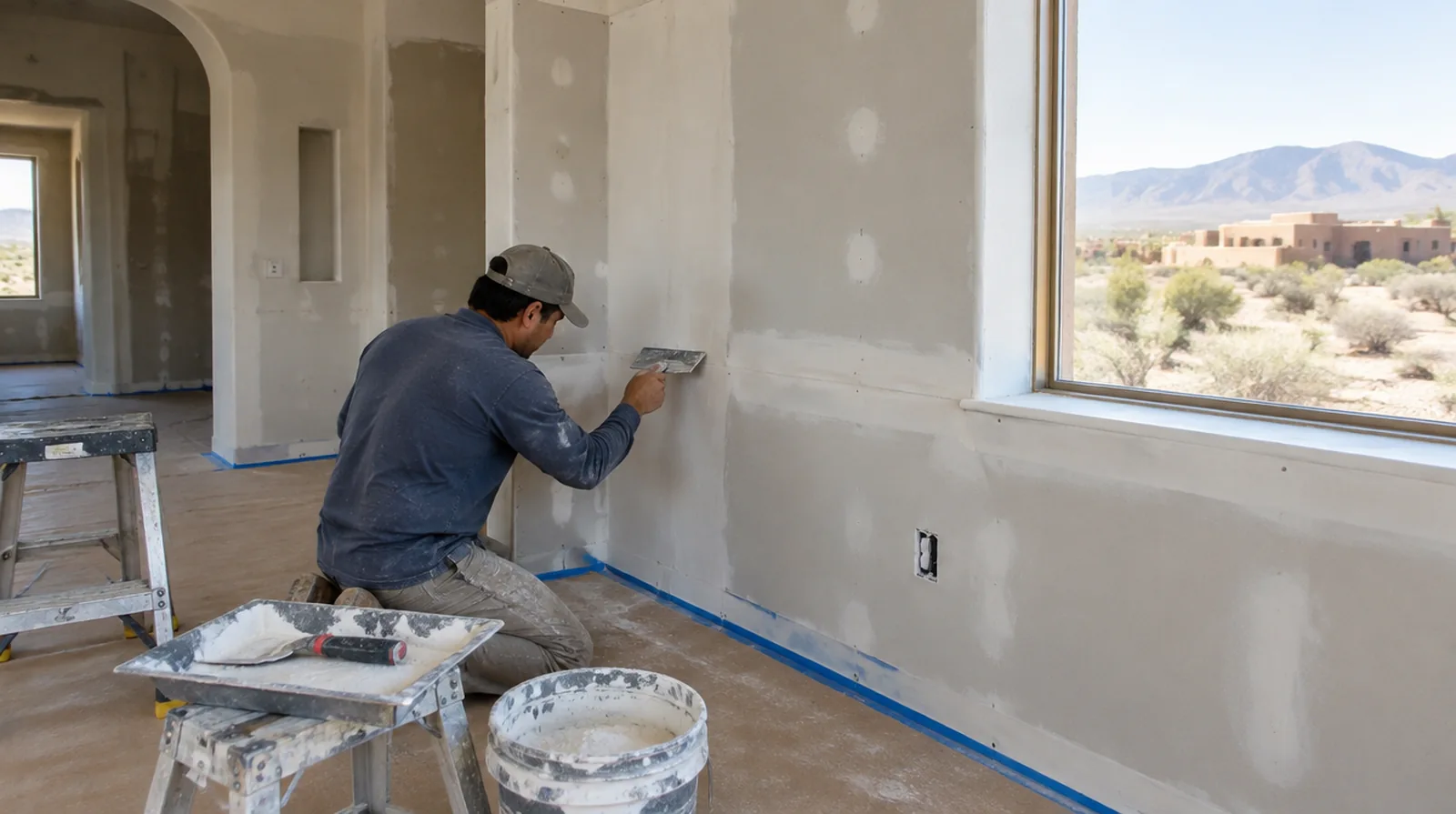
Prepare for primer
Fresh compound and existing painted drywall absorb coatings differently unless the repair receives suitable primer. Establish whether suitable primer is part of the repair or will be applied by another contractor. In a room with little free floor space, identify temporary storage for belongings and establish sufficient clearance for the work before delivery.
Support the replacement
A substantial hole is normally rebuilt with board and proper support, not filled entirely with finishing material. The replacement panel thickness should match the existing face so the joint can finish level. When reviewing the finished work, use the agreed lighting and natural room viewpoints so the assessment reflects the intended use of the space.
Project context in Rio Rancho
Some cracks come from settling soil, so ask whether the crack has been growing. A matching texture sample on scrap board helps before working on the wall.
Scope questions before finishing
When the wall has strong reflected light, look at the full plane instead of judging only the narrow strip immediately beside the patch.
If a room has only limited ventilation, discuss how the finishing materials can dry without disrupting comfort or spreading dust elsewhere.
For an older repair with no clear history, describe when the mark first appeared and whether it has changed through more than one season.
If the coating stability is unclear, assess which layers are adequately bonded and which should be removed rather than simply hidden beneath new material.
While a removed panel exposes the wall surface cavity, complete the necessary review of concealed work before replacement board closes the opening.
If the room will remain occupied, identify a workable separation between the project space and the space that still needs daily access.
For a planned new wall mounted fixture, resolve its backing requirements while the cavity remains open instead of cutting into completed drywall later.
For a wall receiving a decorative covering, provide its preparation requirements early enough for the drywall finish to support that product.
At a repair beside an opening, allow clearance for moving board through the doorway and space to use the finishing tools effectively.
When building management controls access, agree delivery hours and common area protection before committing to a start or finish date.
When a paint contractor follows the drywall work, define the surface condition being handed over and decide who handles any minor final touch ups.
For a surface that will receive wall covering, share the product requirements early so the finishing stage supports the planned decorative treatment.
Explore the Rio Rancho drywall overview for related options, or read the project planning information before arranging the next stage.
More planning details for Rio Rancho
Rio Rancho homes are often stucco outside with drywall inside, and the dry climate shapes how repairs behave. Compound can dry too fast in very low humidity, which can cause cracking or poor bonding. Ask how the finisher controls drying in summer.