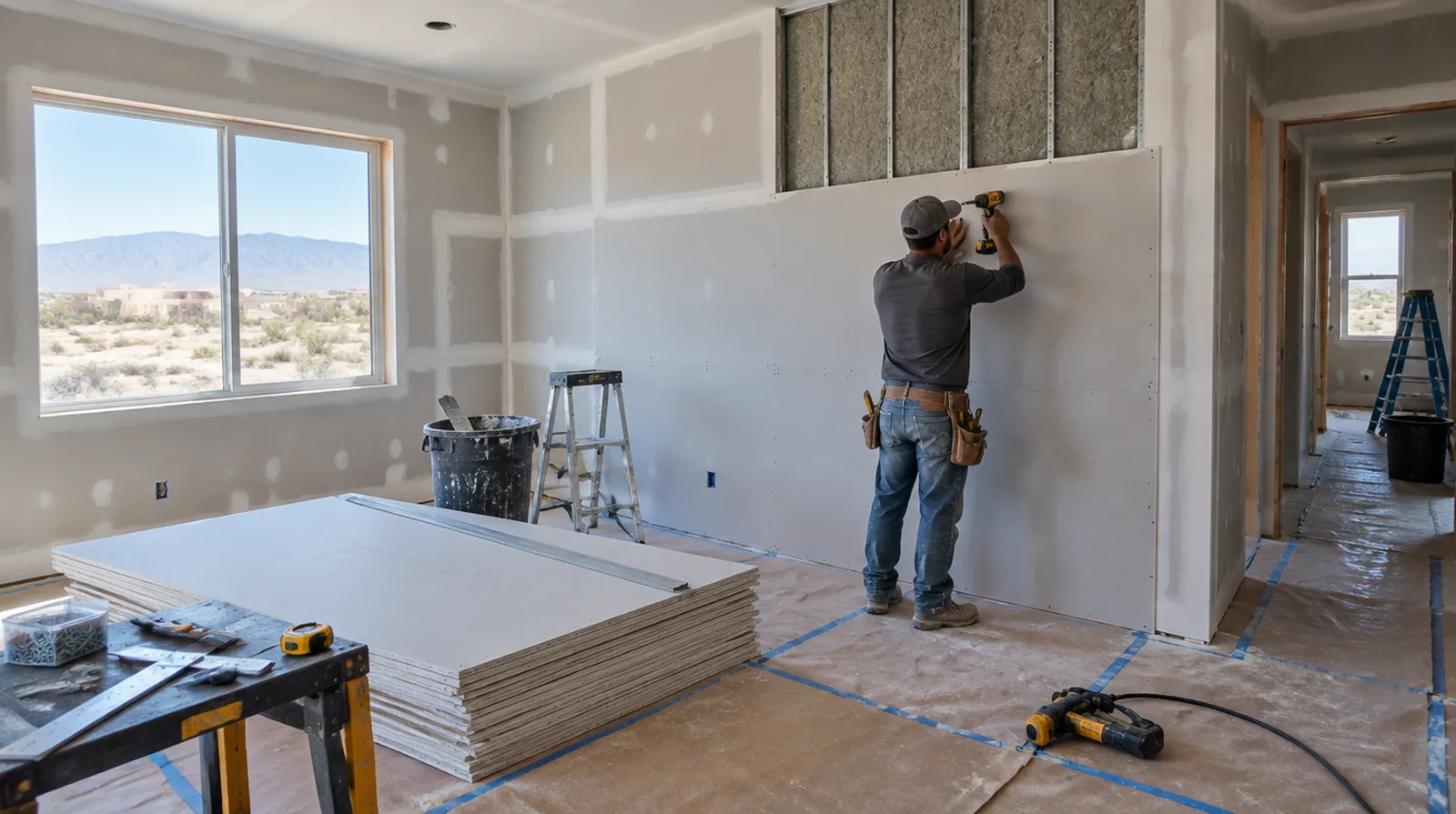
Review the whole assembly
Board layers, framing, insulation and edge details all contribute to acoustic behavior. Select a suitable tested or documented wall system instead of combining unrelated marketing specifications. For a planned new wall mounted fixture, resolve its backing requirements while the cavity remains open instead of cutting into completed drywall later.
Avoid rigid bridges
An unintended rigid connection can reduce the value of a resiliently supported surface. Check fastener and attachment details against the system guidance instead of judging only the visible wall. For a tightly furnished room, plan temporary storage and the minimum working clearance before material is carried into the property.
Respect fire requirements
Sound control modifications must not undermine required fire separation. Confirm compatible materials and details before adding layers or modifying the cavity. For a repair that crosses several surfaces, measure the affected planes separately so the estimate can explain where each finishing treatment starts and stops.
Evaluate added thickness
Additional board layers can affect trim, outlets and the clear dimensions around doors. Include those interfaces in the scope so acoustic work does not leave unfinished perimeter details. For a room that stays in use, set a workable boundary around construction while retaining the access people need for normal daily activities.
Address air leakage
Small gaps around edges and service penetrations can undermine an otherwise substantial wall. Include compatible sealing wherever it is required by the chosen sound control assembly. When the same defect has returned, share information about previous repair methods so the next assessment can consider why they did not last.
Finish the visible surface
Acoustic board still needs the suitable joint treatment and coating preparation. Complete that work without disturbing the details on which the sound control system depends. For a project with several trades, agree which inspection or handover point must happen before the next person starts work.
Include flanking paths
Noise can bypass a treated partition through connected walls, ceilings and floors. Review those flanking routes when explaining why a single wall treatment may provide only part of the solution. When panel replacement exposes a cavity, resolve any required inspection before that opening is closed and the surface finishing begins.
Consider cavity access
An open partition offers differing options from a finished wall that must remain largely intact. The estimate should explain what needs removal and how the interior will be restored afterward. For walls beside bright windows, review a dry sample from an oblique angle as well as looking straight at the repaired surface.
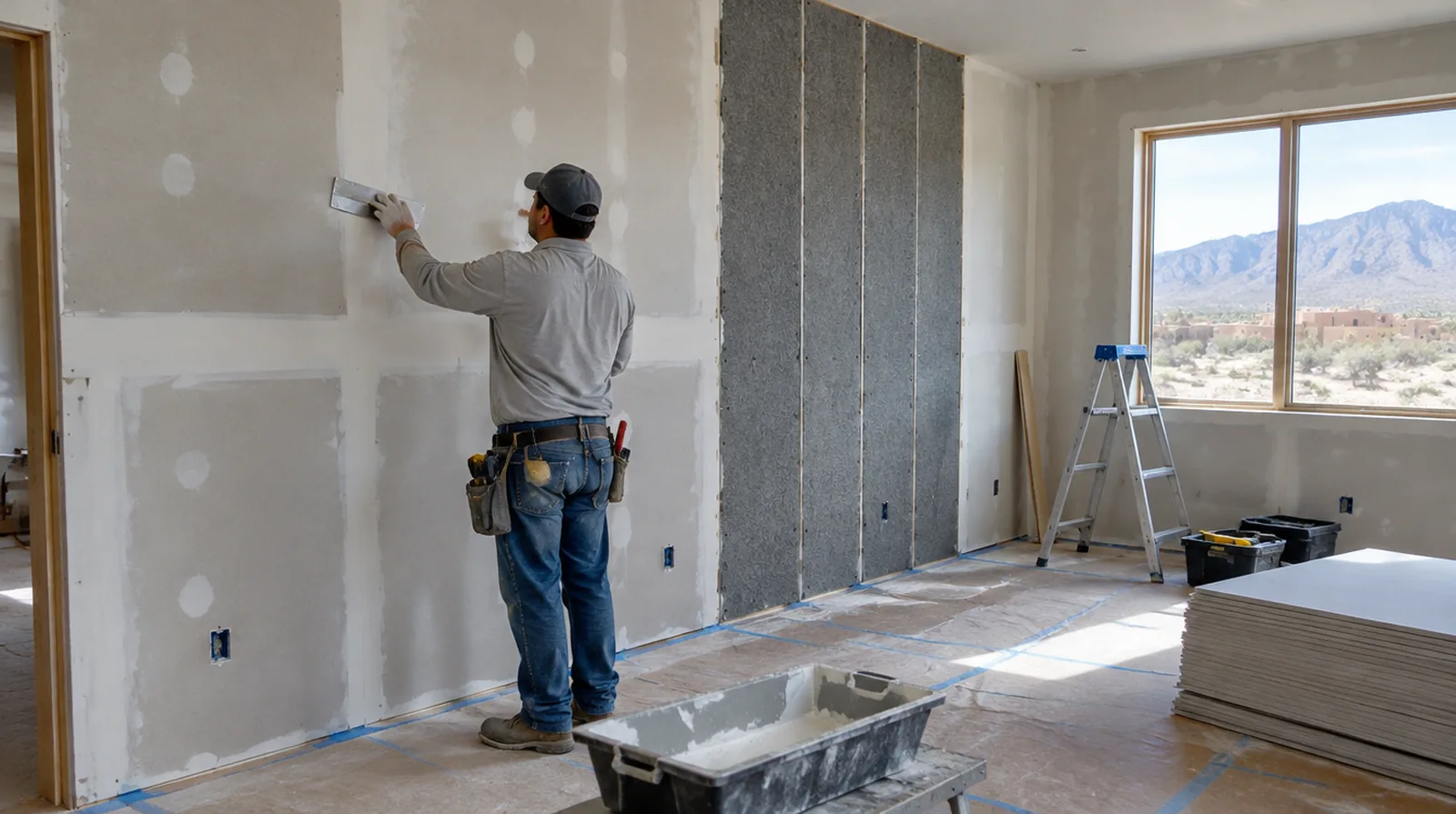
Identify the noise path
Determine whether the main concern is airborne speech or vibration through the building structure. Different transmission paths call for different assessments before a wall treatment is selected. If occupancy must resume on a certain day, include the later primer and paint stages in the timetable as well as drywall installation and finishing.
Explain verification limits
A construction proposal is not the same as a field measured acoustic performance report. A specific performance requirement may justify design advice and suitable field verification by an acoustic specialist. While a removed panel exposes the wall cavity, complete the necessary review of concealed work before replacement board closes the opening.
Project context in Rio Rancho
Garage entries make good staging, but desert dust should be kept off fresh compound. Ask how the finisher controls drying in summer.
Scope questions before finishing
Where flooring is staying in place, agree on protective coverings and check that tools and material handling will not damage the noticeable finish.
For an initial assessment from pictures, provide an overall room photograph and a detailed view of the defect so both context and scale are apparent.
For work spread across differing planes, record their dimensions separately and describe the boundary of the treatment on each surface.
For walls beside bright windows, review a dry sample from an oblique angle as well as looking straight at the repaired surface.
When the decorative coating has been selected, tell the finisher its intended sheen and color while the preparation of the surface standard is still being agreed.
If a separate painter completes decoration, agree the condition of the handed over surface and assign responsibility for small final corrections.
If the ceiling or wall includes fittings, identify the person responsible for removing and reinstalling each item before the work begins.
For a tightly furnished room, plan temporary storage and the minimum working clearance before material is carried into the property.
If scheduling is the main concern, separate hands on labor from drying intervals instead of treating every visit as a full day of active work.
For a room that stays in use, set a workable boundary around construction while retaining the access people need for normal daily activities.
At a ceiling or wall containing fittings, assign removal and reinstatement duties for the affected devices before repair access is needed.
For a limited patch requiring substantial setup, assess the complete package of access and protection rather than relating cost only to the opening size.
Explore the Rio Rancho drywall overview for related options, or read the project planning information before arranging the next stage.
More planning details for Rio Rancho
Rio Rancho homes are often stucco outside with drywall inside, and the dry climate shapes how repairs behave. Compound can dry too fast in very low humidity, which can cause cracking or poor bonding. Great rooms with clerestory windows let strong sun cross the wall and show every ridge.