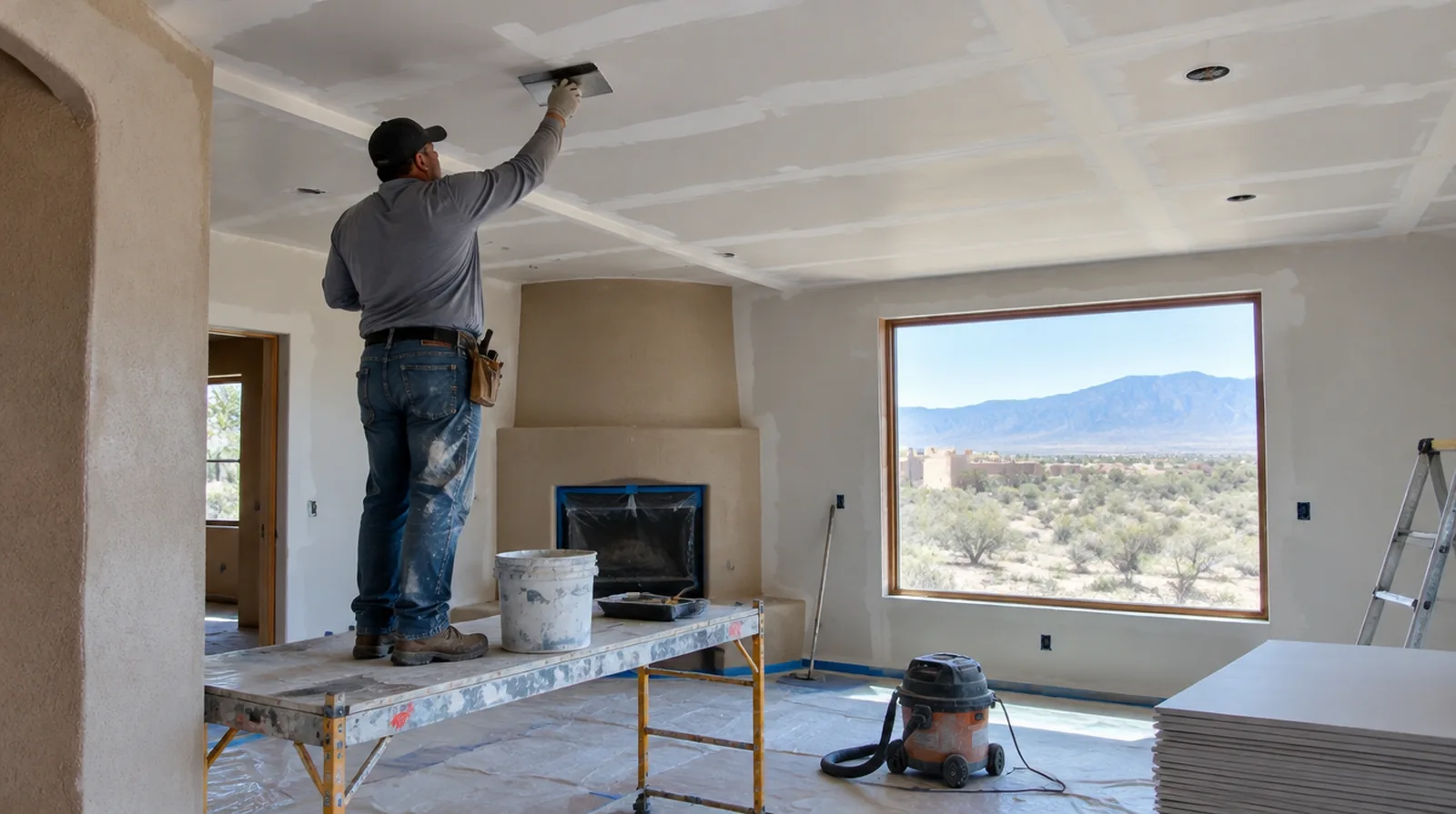
Separate fixtures from board work
Electrical fittings, sprinkler components and mechanical grilles can involve other trades or building approvals. Assign removal and reinstatement responsibilities for any fitting that blocks safe repair access. For a project involving a building manager, confirm access hours and protection requirements before promising a start date or a short completion window.
Plan overhead access
Plan suitable overhead working access around the interior height and its contents. Delicate floors, bulky furniture and fittings may add more setup work than the patch dimensions suggest. Where the wall surface meets fixed furniture, clarify whether removal is included or whether the finish will terminate at the accessible edge.
Evaluate sagging sections
A sagging ceiling needs its supports, fixings and damaged materials assessed, not simply smoothed. Avoid using the area beneath a potentially unstable section until it has been evaluated appropriately. When painting is outside the proposal, describe the remaining decorative preparation clearly so another contractor can price that stage accurately.
Cut back to sound material
A reliable replacement cannot depend on board that has lost strength through water exposure. The removal boundary should reach stable material and allow the replacement to be properly supported. Where several contractors share the renovation, identify the inspection and handover milestones that determine when each following stage can proceed.
Discuss texture expectations
Determine whether the restored area ought to be smooth or carry an existing decorative pattern. A representative sample makes it easier to judge whether the current pattern can be blended locally. Where occupants have dust sensitivity concerns, agree containment and cleaning measures before settling the way the interior will be staged.
Treat the joints overhead
Reinforce the ceiling patch joints and taper the finishing layers well beyond their edges. Overhead seams can be conspicuous because windows often send light almost parallel to the ceiling. For a surface carrying numerous paint layers, discuss whether differences in the retained profile or sheen justify decorating a broader area.
Identify the existing surface
Check whether the overhead finish is gypsum board, plaster or a mixture of older layers. The right repair depends on that actual construction rather than the color of its painted face. For a room that stays in use, set a workable boundary around construction while retaining the access people need for normal daily activities.
Set the repainting scope
Fresh paint over a local patch may contrast with a ceiling that has aged over time. Painting to a natural boundary may be preferable to touching up only the repair. When a quote includes multiple visits, ask what happens during each stage and when the room needs to remain undisturbed between coats.
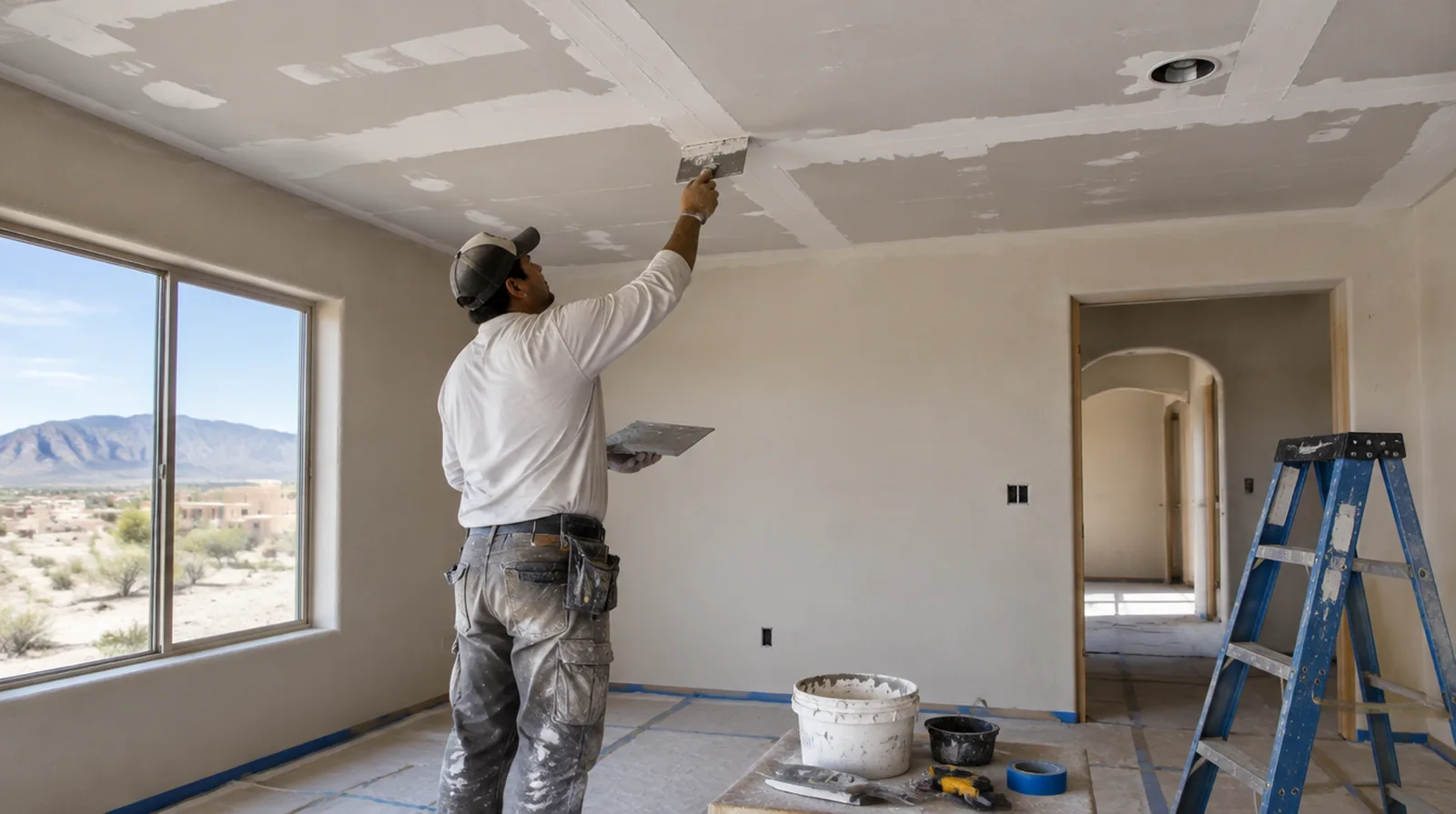
Add reliable backing
A ceiling patch needs fastening support on its edges instead of relying on compound to carry its weight. Fit compatible board thickness so the old and new faces meet without an unneeded step. Where existing floors will remain, specify protective measures and review the path used by panels, equipment and finishing tools.
Review the room after drying
Once the coats are dry, view the ceiling from normal room positions and near its principal windows. Identify outstanding paint preparation while protection and access are still available. When the wall has strong reflected light, look at the full plane instead of judging only the narrow strip immediately beside the patch.
Project context in Rio Rancho
Ask how the finisher controls drying in summer. Garage entries make good staging, but desert dust should be kept off fresh compound.
Scope questions before finishing
At an edge beside built in furniture, state whether the obstruction will be removed or whether finishing stops at the section that can be reached.
For a project with several trades, agree which inspection or handover point must happen before the next person starts work.
Where several contractors share the renovation, identify the inspection and handover milestones that determine when each following stage can proceed.
For an initial assessment from pictures, provide an overall room photograph and a detailed view of the defect so both context and scale are apparent.
If a separate painter completes decoration, agree the condition of the handed over surface and assign responsibility for small final corrections.
Before comparing two proposals, check that both include the same protection, finishing and cleanup boundaries rather than comparing totals alone.
When painting is outside the proposal, describe the remaining decorative preparation clearly so another contractor can price that stage accurately.
Where existing floors will remain, specify protective measures and review the path used by panels, equipment and finishing tools.
When a quote includes multiple visits, ask what happens during each stage and when the interior needs to remain undisturbed between coats.
Where a finished perimeter is prominent, decide whether trim stays in position or is removed before agreeing how the new surface meets that edge.
If access passes through a shared space, arrange protection and a delivery route that do not unnecessarily obstruct other occupants.
When the protected room includes a doorway, check the clearance for panel movement as well as the amount of space available for finishing tools.
Explore the Rio Rancho drywall overview for related options, or read the project planning information before arranging the next stage.
More planning details for Rio Rancho
Rio Rancho homes are often stucco outside with drywall inside, and the dry climate shapes how repairs behave. Compound can dry too fast in very low humidity, which can cause cracking or poor bonding. Great rooms with clerestory windows let strong sun cross the wall and show every ridge.