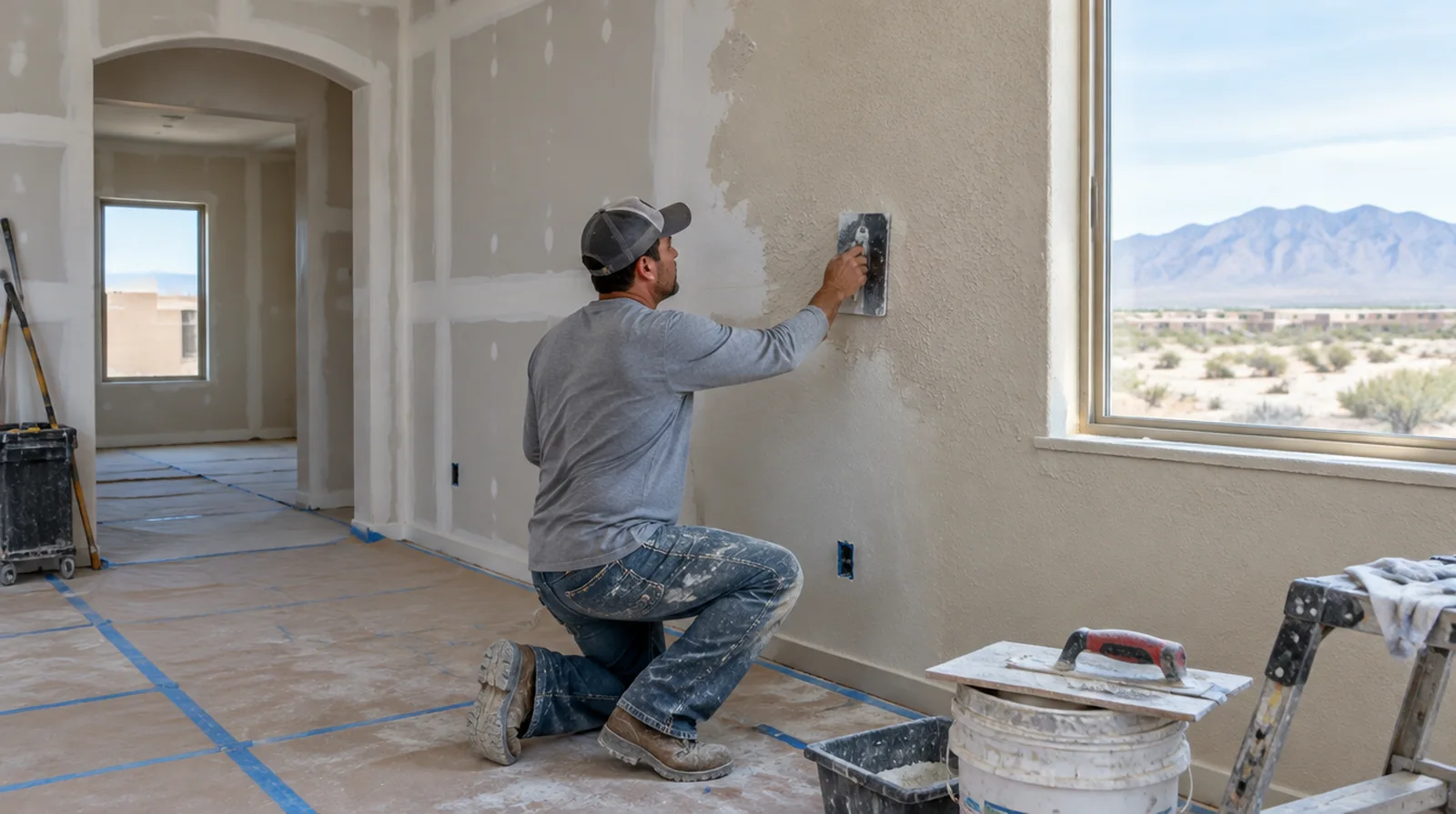
Prepare a sample area
Use a limited trial to compare the scale, distribution and flattening of the proposed finish. Reviewing the sample before coating the full repair reduces uncertainty about the expected blend. At the handover inspection, review the finish from ordinary room positions using the lighting conditions that were agreed for the work.
Check the underlying repair
A decorative pattern will not reliably disguise a ridge or an uneven board joint underneath it. Complete a stable level repair before trying to reproduce the surrounding texture. If the ceiling or wall includes fittings, identify the person responsible for removing and reinstalling each item before the work begins.
Identify the existing pattern
First determine how the current texture creates its pattern and relief. Examine the surface in the light the interior actually receives before choosing a spray or hand applied method. For a project with several trades, agree which inspection or handover point must happen before the next person starts work.
Study the paint layers
Repeated painting can soften an old pattern and change how its peaks reflect light. A fresh application may need adjustment to resemble the current surface rather than the original texture recipe. If there is a fixed move in date, reserve enough time for the coating stages after drywall work instead of counting only the installation period.
Blend beyond the patch
An abrupt rectangular texture boundary often draws attention even when the pattern itself is close. Gradually extending the texture into the surrounding surface may make the blend less abrupt. If a distinct painter completes decoration, agree the condition of the handed over surface and assign responsibility for small final corrections.
Control application conditions
Spray settings, material consistency and working distance all influence the resulting texture. Room conditions and drying rate also influence when a knockdown pass should be made. For a room with restricted airflow, plan drying conditions alongside dust protection and the comfort of people occupying neighboring spaces.
Judge from normal positions
Assess the dried texture from everyday viewpoints instead of judging only a close view of a wet sample. The planned coating sheen and oblique light both belong in the final appearance discussion. Where the wall meets fixed furniture, clarify whether removal is included or whether the finish will terminate at the accessible edge.
Protect surrounding finishes
Mask adjacent materials against sprayed compound and other application debris. Protect the full reach of the operation, including fittings and trim beyond the original damaged spot. If the proposal requires return visits, identify the purpose of each stage and the intervals during which finishing material needs to remain undisturbed.
Use appropriate primer
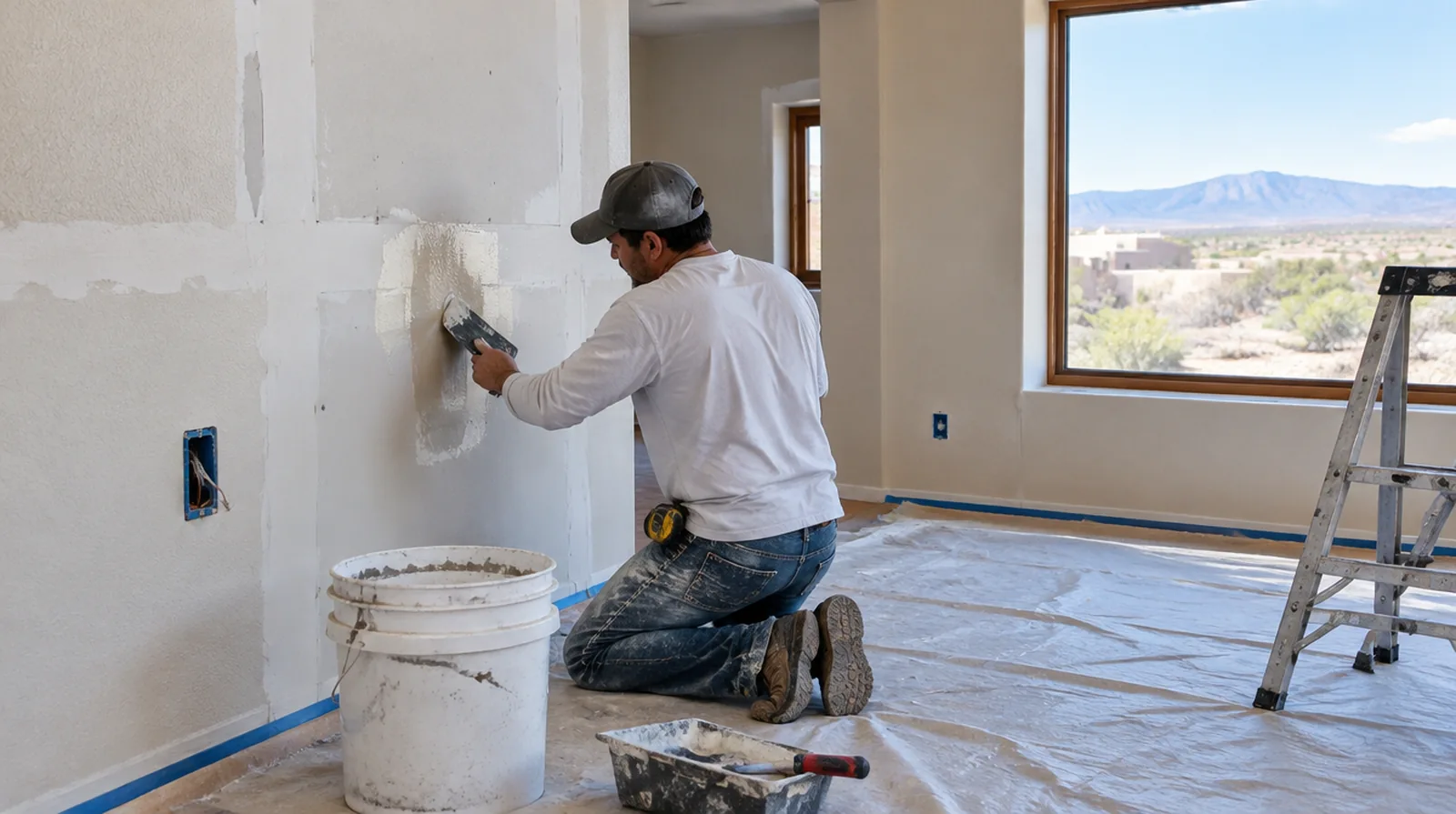
A new texture and the painted wall around it can take up paint unevenly. A suitable primer helps the paint system perform consistently without changing the texture profile unnecessarily. For a surface carrying numerous paint layers, discuss whether differences in the retained profile or sheen justify decorating a broader area.
Set realistic blend expectations
An exact invisible match is not always possible on a weathered or repeatedly painted surface. A wider wall treatment may be worth discussing if a localized repair remains conspicuous. At an edge beside built in furniture, state whether the obstruction will be removed or whether finishing stops at the section that can be reached.
Project context in Rio Rancho
Great rooms with clerestory windows let strong sun cross the wall and show every ridge. Tract homes usually have a common texture, but it may differ slightly room to room.
Scope questions before finishing
If an independent painter completes decoration, agree the condition of the handed over surface and assign responsibility for small final corrections.
For a small repair with extensive setup, compare the total scope instead of assuming the price should follow the hole dimensions alone.
When painting is outside the proposal, describe the remaining decorative preparation clearly so another contractor can price that stage accurately.
If scheduling is the main concern, separate hands on labor from drying intervals instead of treating every visit as a full day of active work.
When concealed damage is possible, establish how additional findings and any proposed removal will be recorded before the scope changes.
For a limited patch requiring substantial setup, assess the complete package of access and protection instead of relating cost only to the opening size.
Where flooring is staying in place, agree on protective coverings and check that tools and material handling will not damage the visible finish.
When reviewing the finished work, use the agreed lighting and natural room viewpoints so the assessment reflects the intended use of the space.
If the surface condition is uncertain, allow for an assessment that can distinguish stable material from layers that should not be covered.
For a repair that crosses several surfaces, measure the affected planes separately so the estimate can explain where each finishing treatment starts and stops.
For a distinctive existing pattern, retain a reference sample or detailed picture to make the matching discussion more specific.
When photographs are used for an initial discussion, include a wide room view as well as a close view so scale and surrounding finishes are understandable.
Explore the Rio Rancho drywall overview for related options, or read the project planning information before arranging the next stage.
More planning details for Rio Rancho
Rio Rancho homes are often stucco outside with drywall inside, and the dry climate shapes how repairs behave. Compound can dry too fast in very low humidity, which can cause cracking or poor bonding. Ask how the finisher controls drying in summer.